
Before migrating from YourMembership to iMIS, take time to decide what data deserves to make the move.
Moving from YourMembership (YM) to iMIS gives associations an opportunity to improve how they manage membership, events, communications, and other essential operations. But a new association management system (AMS) does not automatically solve problems with inaccurate, inconsistent, or outdated data.
Over time, associations accumulate information that no longer serves its original purpose. Membership records become outdated. Duplicate contacts appear. Custom fields multiply. Historical data remains in the system long after anyone remembers why it was collected.
When associations begin planning an AMS migration, the instinct may be to bring everything along. After all, the information might be useful someday. But migrating everything is not necessarily the safest or most effective approach.
Bring everything along, just in case.
What information does our association actually need to operate effectively in its new system?
At Starkweather Association Services, we have spent 20 years helping associations implement, troubleshoot, maintain, and improve their YourMembership systems. Association databases evolve as organizations introduce programs, adjust membership categories, modify dues structures, and respond to changing needs.
We see situations like these all the time:
These situations are often the natural result of years of organizational change. However, when the association moves to a new AMS, those accumulated decisions deserve another look.
Migrating unnecessary data can complicate configuration, make reporting less reliable, and confuse staff learning the new system.
Before beginning cleanup, create an inventory of the information currently stored in YourMembership.
Identify the major data categories, custom fields, membership structures, and historical records your association maintains. For each, determine:
This inventory provides a starting point for prioritizing cleanup efforts and helps prevent decisions about data migration from being made without input from the people who rely on that information.
Before migration, examine whether your database contains duplicate contacts, incomplete profiles, inconsistent addresses, or records that have not been updated in years. Are individual and company relationships accurate? Are membership statuses consistent? Which historical details are needed for reporting, compliance, or member service?
Not every inactive record should be deleted. Former members may return, and historical records may be needed for reconciliation or trend analysis. The goal is to understand which records are valuable, correct inaccuracies, and decide how information should be represented in iMIS.
Associations frequently develop complicated membership and dues structures over time. Some categories reflect important differences in benefits, eligibility, or pricing. Others may exist because of exceptions created years earlier.
Review categories, dues rules, renewal dates, and related processes. Are all categories still necessary? Do they reflect current operations? Are exceptions documented? Let business decisions guide the new configuration, rather than allowing historical database structures to dictate how the association operates.
Custom fields may have been created for a particular event, old application, temporary initiative, or reporting need. Identify which fields support current operations, which are needed for reporting, and which can be retired.
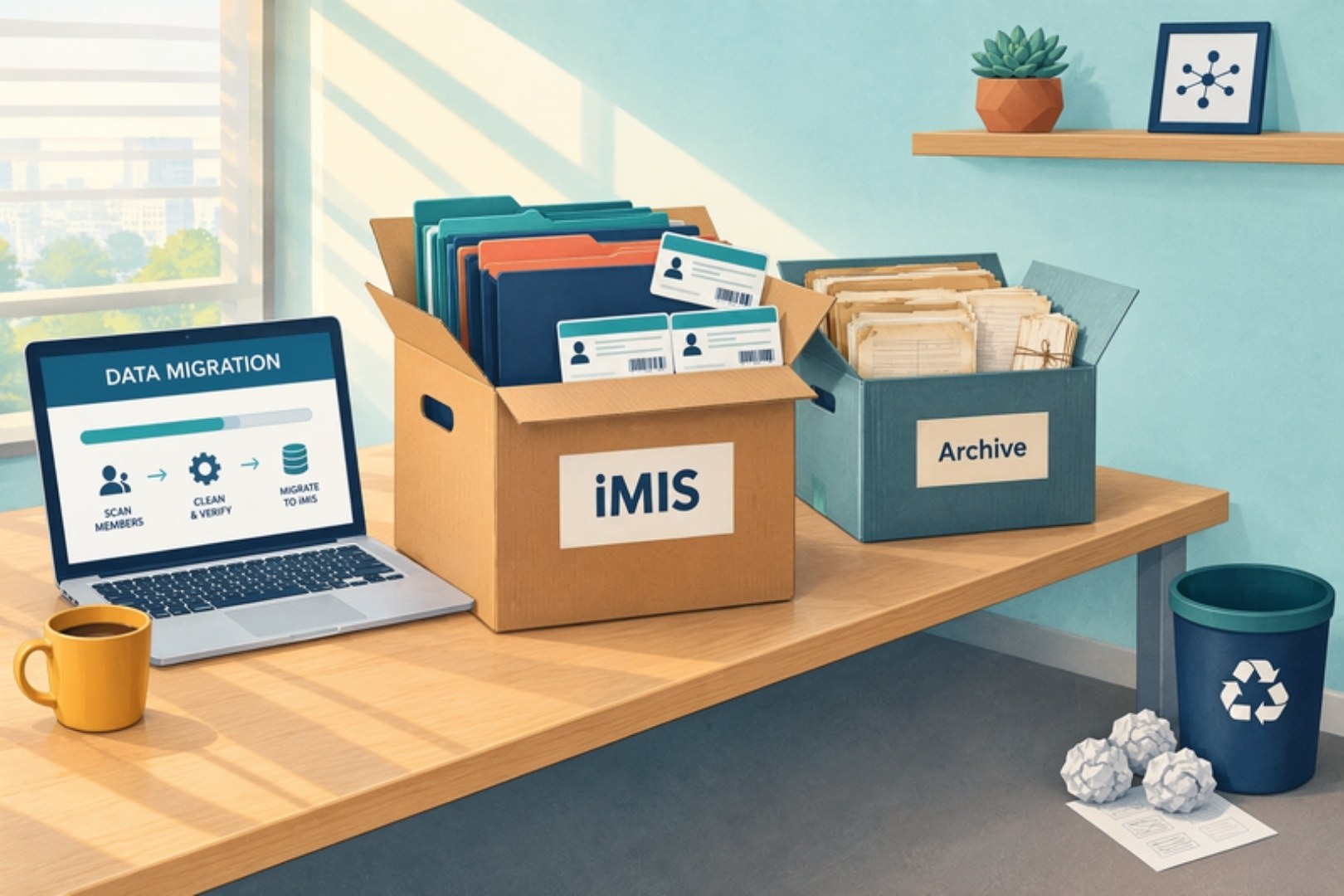
Some historical information should be retained without necessarily residing in the active iMIS database. Distinguish information staff need immediately from records that can be preserved in a secure historical archive. Retention requirements, privacy obligations, and future reporting needs should guide those choices.
Historical data helps associations answer questions about participation, continuing education, payments, and engagement. But different types of history serve different purposes. Continuing education credits may need to remain available for credentialing even when old event-registration details have limited operational value.
Financial history may require different treatment from event or membership records. Decide what must remain accessible, what supports ongoing operations, and what can be retained separately. Include the staff responsible for education, events, accounting, and compliance in these decisions.
Associations track many kinds of relationships: individuals connected to companies, employees who receive benefits through organizational memberships, committee participation, and chapter and group affiliations. These relationships can determine eligibility, benefits, access, and reporting.
Moving contact records without preserving necessary relationships can cause problems even when individual fields appear correct.
For example: organizational memberships
An association may use organizational memberships in YourMembership to provide benefits to employees connected to a member company. Before migrating to iMIS, the association should identify:
These decisions help guide how organizational relationships and eligibility rules should be configured and validated in iMIS. Without this review, an association could successfully migrate individual contact records but still encounter problems with member benefits, access, or reporting.
Improves the quality, consistency, and relevance of information.
Transfers and transforms information from the existing system into the new one.
Both matter, but they are not interchangeable.
A migration team may be able to move a field from YourMembership into iMIS. That does not establish that the information is accurate, that the field is still needed, or that the association agrees on how it should be used.
These are business decisions as much as technical decisions.
Begin reviewing data before detailed mapping and configuration are finalized.
Data cleanup should not fall entirely on the IT team or implementation consultant. The people who work with the data every day know why it exists:
Including these perspectives helps determine what to migrate, correct, and preserve outside the active system. It also reduces the risk that important information is overlooked because its purpose is not obvious from the database structure.
Even after data has been cleaned and mapped, verify that the migrated information works as expected in iMIS. A successful data transfer does not necessarily mean the association can perform its essential business processes.
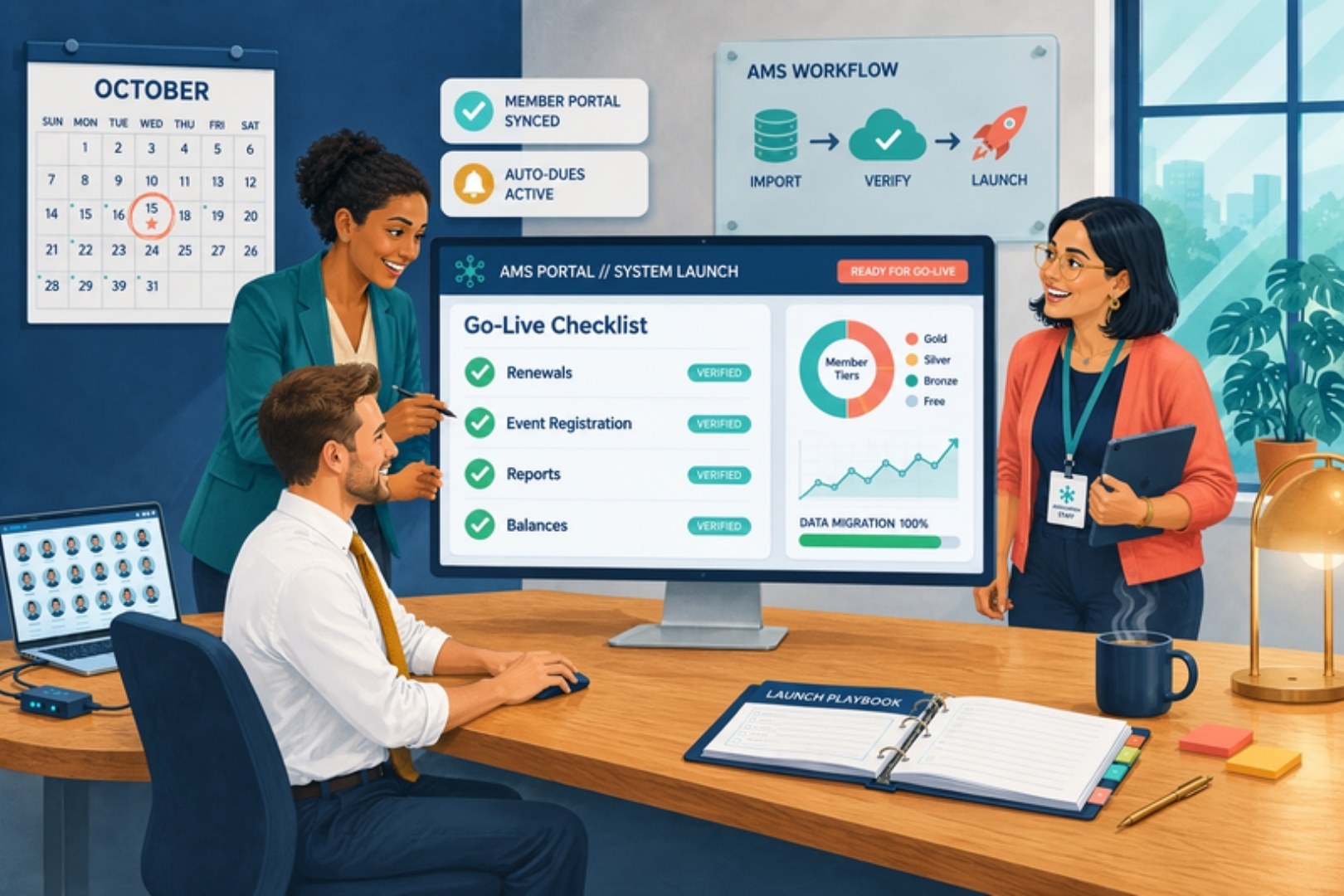
Test realistic scenarios such as:
Verify that relationships, statuses, balances, and other important information support intended workflows.
Reconcile key record counts and financial totals where appropriate, investigate discrepancies, and document intentional exclusions.
Moving from YourMembership to iMIS is more than a technical transfer. It is an opportunity to improve the quality of the information your association relies on and ensure that data supports how the organization wants to operate moving forward.
Before migration begins, have a clear understanding of
Making these decisions early helps reduce complications during implementation and creates a stronger foundation for the new system.
At Starkweather Association Services, we bring 20 years of YourMembership experience together with strategic discovery, business process analysis, and association technology consulting.
As an Advanced Solutions International (ASI) Consulting Partner, we help associations understand existing environments, prepare for migration, and make informed decisions about their move to iMIS.

